Posts

Polish "Exceptionalism": Retroactive Exemption from European Energy Obligations?

Image
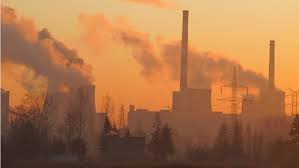
The core message in the current Parliamentary elections for Law and Justice (PiS) on energy issues is to repeal Poland's commitment to participation in the European Emissions Trading Directive and other environmental requirements that limit the unfettered use of coal in Poland. Their argument is that Poland is so dependent on coal that it is unfair to require the same things of Poland that other EU Member States have not only committed to, but are doing. The assumption of this argument is that, but for the emission charge on CO2, that coal energy would be profitable. This is a fundamental fallacy for several reasons. First, the current system grants free allowances for coal emissions and coal-fired power is still not profitable.[1] The current electricity rates make it difficult for the power companies to invest in new facilities, but simultaneously those rates are higher than Germany next door. The profitability of the coal-fired electricity sector is already very weak without...
Black-outs On the Horizon in Poland

Image
Aging coal-fired power plants are, of course, problematic for the reliability of the Polish electricity supply. A single outage in one or two huge coal plants can cause major problems in the grid supply of electricity, as we saw this summer. However, the strategy of building large new coal-fired power blocks is also problematic for many of the same reasons. Poland is the only country in Europe pursuing this strategy and it makes no sense. A new report from a Polish expert  argues that shortages could become critical in three to four years. The aging power plants are closing (many this year due to the end of their exemption period under the EU rules for major combustion plants). Others will simply close because they are falling apart in the next few years. The only sources of electricity that can fill this void and create a more reliable and diversified electricity supply (critical to continued economic growth and energy security) are renewable energy sources (which could t...

Excellent Analysis of Inevitable Bankruptcies in the Polish Coal Sector

Image
The politicians cannot face the truth. But every good analyst already knows the outcome of the faltering coal sector in Poland. Less coal needed every year, higher priced domestic coal-fired electricity than our neighbors energy prices, most mining of coal cost more per ton than the market value, massive negative cash flows from the state-owned mines..... the end will not be pretty. This latest detailed article  in "High Voltage" lays out the numbers. By connecting the electricity utilities owned by the state to the mines going bankrupt the Government has basically used the financial resources of the utilities to achieve a political goal which will have a bigger economic price tag every year, before it hits bottom. The state-owned utilities have already signaled the same inevitable problem with their aging coal blocks as we have seen in Western Europe - a write-down of unprofitable assets. This occurs in the face of the Polish energy sector needing over 100 billion PL...

Poland's Reliable Coal Plants are NOT......

Image
Apparently the problem of getting enough cooling water for the coal-fired power plants in Poland is not going away this winter. The likelihood is that residential users as well as industrial ones will be hit with restrictions on energy usage. Low water levels which will now freeze up in January will make it impossible to get enough cooling water to the coal-fired plants. Of course, our neighbors will diversified electricity providers have not reported any problems. They rely on more renewable energy which is not related to the need for massive amounts of cooling water. In fact, the PV solar element is counter-cyclical to low water levels: more sunshine/less water. Every politician in Poland has been too busy pushing the hopeless coal sector here is see the inevitable problems of 90% dependency on one type of electricity production.

The Hand Writing in on the Wall: Nuclear and Shale Gas in Poland are Going Nowhere

Image
I wrote in a blog post some months ago that Polish energy policy is hitting reality.  The plans for a nuclear plant have been naive and overlooked the simple fact that it will cost a lot of money and provide electricity as expensive as any other source. It is also likely to be illegal aid under EU competition rules [see pending European court challenge). The shale gas potential of Poland has been lost on the legal problem of no ownership of mineral rights, excessive government demands for payments, taxes, and red tape. Coal is...well, coal. It is dying everywhere else and the economics in Poland are especially unfavorable (deep mining, high sulfur content and high ash content). It cost more to mine generally than it can be sold for for the foreseeable future. The power plants that burn it are aging dinosaurs that are inefficient, enormously polluting, and threatened with near-term extinction by the carbon emission penalties. Now the shale gas wells are clearly an illusion at be...

Comments of the Polish Biogas Association on the Ministry's Proposed Biogas Auction Reference Prices

Image
POLISH BIOGAS ASSOCIATION COMMENTS ON SUGGESTED REFERENCE PRICES September 2015      The proposed reference prices released by the Ministry of Economy for the first auctions under the new law significantly understate the support necessary for anaerobic digestion plants. The numbers proposed are as follows: 1) agricultural biogas plants with a capacity of 1 MW - 450 zÅ‚ / MWh 2) agricultural biogas plants with a capacity exceeding 1 MW - 435 zÅ‚ / MWh 3) biogas plants using biogas from landfills - 210 zÅ‚ / MWh 4) biogas plants using biogas from wastewater treatment plants - 400 zÅ‚ / MWh 5) biogas plants using biogas other than in paragraphs 3 and 4 - 340 zÅ‚ / MWh Analysis      There is no data from any source that we are aware of to support the price set in the proposal for agricultural biogas under items 1 and 2. Basic biogas costs for agricultural plants of various sizes were set out by the European Biogas Association in 2...

Please Help

Image
Please help my blog by linking it on other sites. Even your public pages on Facebook. This help search engines find me and builds traffic. I would like to obviously reach more people with unfiltered news about energy and the environment in Poland. Thanks for any assistance!

Rumors that the Treasury Ministry Thinks the Small Auction Will be Pointless and Expensive

Image
There are rumors in Warsaw that the Polish Treasury Ministry thinks that the small auction for renewable energy support (below 1 MW) will be waste of time and resources. Because 25% of all of the support provided from 2016 and beyond must go to small sources, and small sources will not be sufficient to meet the target, anyone who bids in an auction within the maximum price will win. At the same time, the cost of setting up the auction is pretty much the same whether 250 kW a project are being bid or 150 MW. The Ministry of Economy conceded in the Parliamentary debate on the RES bill that there will be more support offered small sources than there will be projects. This means that there will really be no competition for support and no real pressure on the prices sought. All bids will win.... causing us to ask earlier why have an auction at all? Apparently the Treasury thinks the same thing. The European Commission must accept the "GBER notification" from the Polish Governm...

Health Effects of Coal in Poland Dwarf Concerns About Windmiils

Image
The party leading the polls to take charge of the Polish Parliament (Law and Justice) has a campaign to fight wind farms in Poland. They complain about their aesthetics and possible noise issues for immediate neighbors. Law and Justice wants to ban wind farms in most of Poland by placing restrictions on their siting. This is an amazingly hypocritical viewpoint all things considered. Wind energy is gradually replacing coal in most of Europe. It could reduce coal burning in Poland as well. Even the Pope has weighed in on the need for a "rapid transition" away fro coal energy. The observed effects of burning coal in Poland are not in dispute: The World Health Organization (WHO) estimates that poor air quality resulting from low emissions in Poland is the reason why an average of 48 thousand. premature deaths a year and shorten life by an average of 10 months. Link. Law and Justice proclaims that it is the Christian party and is comprised of many devote Catholics. I...

How Will Injection of Politics into Tauron Affect Shareholders?

Image
The verdict is still undecided, but the initial view is not encouraging. The Treasury Ministry is using its leverage as the major shareholder to put in new directors who are more friendly toward the idea of bailing out a bankrupt state-owned coal mine. The initial Tauron proposal based on a real business case was dismissed by the unions and the government. The Polish Government wants to use Tauron's economic muscle to bail out a mining company that is not economical to operate. Why would private investors have any confidence that such companies manipulated by the government are actually operating in a manner designed to benefit their other shareholders? See source, August 13, 2015. Note: August 26, 2015: All the state-owned electricity companies have been hit hard by falling stock prices. The Government has also pushed the other company boards to use their company resources to bail out coal (on very unrealistic terms due to union pressure). If successful, the Governme...

Will Electricity Shortages in Poland Change Any Policies?

Image
Poland is stumbling over a cliff on its energy future. Poland's energy future has been the subject of hundreds of ages of "plans" written by out of touch bureaucrats beholden  to the invested interest of the state in its coal-fired utilities. Not surprisingly, these plans have little to do with reality. See "Hitting Reality: Polish Energy Policy Meets the Facts, " May 2014. Now electricity shortages and threatened brown-outs may compel Polish politicians to start at least trying to consider technological and economic realities. Alone in Europe, Poland is building new coal-fired capacity while its coal and lignite fired current plants are relics of a past age. New coal plants will cost more than wind energy and during their useful life they will also be more expensive than PV. But they will only be profitable if they can operate at high rates of utilization. On average, Poland uses about 55% of its electricity capacity and renewable energy gets a priority in...

Polish RES Law Acknowledges that Green Certificates are State Aid

Image
While the Commission communicated to the Polish Government in 2013  that it considered the Polish Green Certificates to be state aid, requiring notification of the Commission and approval under the 2008 guidelines, the Polish Government has repeatedly denied this fact. Now in the new law on RES, Article 39.2 requires that certificates and other forms of support be added together to determine if the state aid limits on support for an individual project would be exceeded. This reflects the fact that the Polish Government has known for years that the Green Certificates are state aid. The Commission has decided that green certificates are state aid in every case before it (earlier based on the substitution fees in various Member State laws and later on the certificate as a valuable asset itself). See  DOUBLING DOWN ON A JUNK POKER HAND: THE POLISH GOVERNMENT APPARENTLY INTENDS TO IGNORE ITS TREATY OBLIGATIONS ON STATE AID , Mott's Blog, June 7, 2014 (detailed references and...

The Impending Scandal Over "Capacity Markets"

Image
Losing the ability to sell electricity much of the time to renewables, the coal-based energy sector has come up with a new mantra: capacity markets. This requires that consumers and/or taxpayers pay to have the old fossil fuel plants sit there and "be available" for peak needs. This will cost the German dearly, annually over ten billion more than assumed. Using coal plants as "peakers" to meet the highest part of the demand cycle is very, very inefficient. As costly as energy storage is now according to its skeptics, it is still more cost effective than using fossil-fuel peaker plants! The Edison Electric Power Research Institute reported a benefit to cost ratio over one for nearly every technological scenario.  “ Cost-Effectiveness of Energy Storage in California,”  Application of the EPRI EnergyStorage Valuation Tool to Inform the California Public Utility Commission  Proceeding R. 10-12-007  3002001162  (2014). One has to speculate that the state aid gui...

The Notion of Cheaper Fossil Fuels Has a Shelve Life

Image
The arguments advanced in Poland in favor of the continued public investment in coal and lignite all center on their availability (which is an empty argument ) and their relatively lower price.  The lower price of fossil fuels is a near-term fact in some ways (depending on where you are on-shore wind may already be cheaper than new coal plants). See U.S. EIA (2014). But the cost advantage of fossil fuel has a shelve life, It is a transitional notion that will disappear in the coming years. Even China, which was rapidly expanding coal-fired capacity has slowed down now, and the future will belong to renewables.                                                   Source: Bloomberg 2015.    Generally in China, the "cross-over" point for on-shore wind is 2022 and the point for PV is 2027. In some other places it has already been hit. This i...

What Does Everyone in Europe Know that Poland Does Not? No Future in Coal

Image
Now another company has made a business decision based on an objective view of the European energy market...... ENGI elected not to go forward  with plans for a coal-fired electricity plant in Lublin, Polish politicians try to sell their commitment to coal as an energy security issue. At least Poland has coal, so it goes. But if it is not economically feasible to use coal, especially most Polish coal, then how is this argument any different than saying that Poland has tides for wave power? ["... current demonstration projects suggest the levelised cost of energy (LCOE) [for tidal power]to be in the range of EUR 0.25-0.47/kWh ."]. If an energy resource is not economically feasible, it ceases to be a realistic major part of energy security. __________________________________ Note: For the price of 0.17-0.23 EURO/kWh, Poland can have biogas that produces roughly twice the green energy accounting the heat utilization. Source: European Biogas Association 2011: Polish Bi...